A Practical Review of the I Love You Mom Embroidery Design
From my perspective as someone who has turned embroidery files into thousands of finished products, a design’s real value isn’t in its preview image—it’s in how it performs when the needle starts moving. When I look at the I Love You Mom SVG design, I’m immediately thinking past the digital file and visualizing it on fabric. This is a design with a specific, warm-hearted purpose, and its success hinges on how we, as makers, apply it.
The First Impression: Warm Nostalgia Meets Clean Crafting
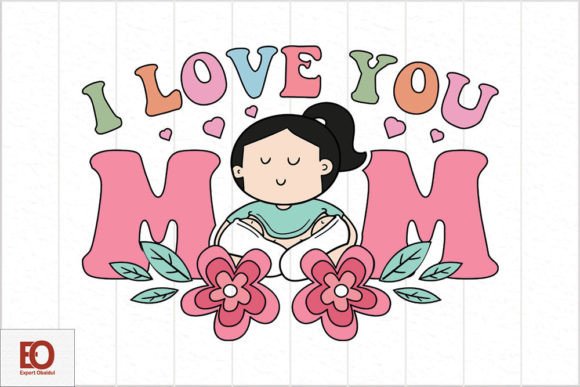
The “I Love You Mom” text, arranged in that classic retro style, creates an instant mood of affectionate nostalgia. It doesn’t shout; it feels sincere and timeless. The layout is straightforward, which is a significant advantage for embroidery. The clean lines and open lettering mean it’s not fighting with itself with overly intricate details. This visual personality leans toward giftability—it feels made for a keepsake. My mind goes directly to projects meant to be cherished: a pillow cover for a mother’s bedroom, a framed embroidered piece, or the centerpiece on a special occasion apron.
Where This Design Naturally Belongs
In a real-life scenario, imagine you’re preparing a custom embroidered tote bag for a Mother’s Day gift from a small boutique. This design is a perfect candidate. The sentiment is universal, the style is sweet without being juvenile, and the scale would work beautifully on a bag panel. I’d also confidently stitch it onto the cuff of a high-quality sweatshirt or as a subtle feature on a kitchen towel. It has that “personalized gift” aura that resonates deeply with customers looking for something more meaningful than generic store-bought items.
Performance in Real-World Embroidery Projects
Let’s talk about application. For custom apparel like t-shirts and sweatshirts, the design’s success will depend heavily on your choice of stabilizer and stitch density. On a cotton tee, a crisp satin stitch for the lettering would look elegant, but you must manage the pull on the fabric. On a denser fabric like a tote bag or denim apron, it becomes much more forgiving and will yield a very professional look.
For baby clothes or nursery decor items, this design scaled down needs careful attention. The “Mom” lettering, if made too small, could lose clarity. I’d recommend using it as a larger feature on a baby blanket rather than a tiny motif on a small shirt. As an embroidered patch, it would be charming, but again, watch the density—a too-dense fill stitch on a patch can make it stiff and bulky.
For craft business items, this design is a solid asset. An Etsy seller offering personalized Mother’s Day gifts could use this on a range of products—from pillow covers to tea towels—creating a cohesive seasonal collection. It lends itself well to printable mockups for digital product listings, showing customers a clear vision of the finished product. In commercial embroidery, for a small shop selling branded merchandise, it offers a classic, emotion-driven option that has broad appeal.
Caution Zones: Where to Slow Down and Test
Not every project is an ideal canvas. On curved surfaces like caps, the design’s straight-line layout might require strategic positioning to avoid distortion at the seams. On very textured fabrics, like a boucle sweater, the clean lettering could get lost—a simpler, bolder stitch type might be necessary.
Dark fabric backgrounds are a classic consideration. The design’s appeal relies on clarity, so thread color contrast is paramount. You’ll want to test a bright, warm white or a soft pink on a dark navy to ensure it pops. Thin or stretchy fabrics demand extra stabilizer to prevent the embroidery from causing the fabric to pucker or warp, especially around the filled areas.
Most critically, for products destined for frequent washing—like everyday kitchen towels or wearable apparel—you must ensure the stitch density and thread anchoring are robust. A loose running stitch in small details might not hold up over time. Always test on a scrap of the actual project fabric first.
The Impact on Your Craft and Your Customer
When this design is stitched well, its visual appeal is directly tied to stitching clarity. Clean edges on the letters communicate quality. That quality translates into perceived product value and builds customer trust. For a handmade presentation, it feels intentionally crafted, not randomly applied. This strengthens brand consistency for a small business owner who specializes in heartfelt gifts.
The giftability factor is high. It’s recognizable and professional without being corporate. It engages a buyer’s emotion, which is a powerful driver for purchases in the crafts and graphics space. A customer seeing this on a mockup or a finished product imagines the recipient’s smile—that’s a good design doing its job.
Practical Notes From the Embroidery Desk
Before you commit this design to a client project or your shop merchandise, do your due diligence. Test it on scrap fabric first, in both light and dark colors. Review the stitch density in your software preview; look for any potential snags in tiny corners. Confirm your hoop size can accommodate the design at the scale you want—don’t assume.
Since the product includes file formats like SVG, DXF, and PNG, you have flexibility for both machine embroidery design and digital use for mockups. However, a crucial step is to confirm the licensing. Before selling finished items or using it as a commercial embroidery file for multiple client products, verify the terms. The inclusion of an EPS file often suggests commercial use is permitted, but always check explicitly to protect your craft business.
Finally, consider thread colors thoughtfully. This retro Mom’s Day design might traditionally suggest soft pinks, reds, or creams, but don’t be afraid to adapt it to your brand palette—a sage green or a deep burgundy could make it uniquely yours. The design is a versatile asset; your skillful application turns it into a remarkable finished product.
In essence, the I Love You Mom design is a reliable, sentiment-driven tool in your embroidery toolkit. It asks for thoughtful application rather than complex technical handling, and when used with care on the right product, it delivers a warm, professional result that both you and your customer will be proud of.